Thirty years inside one color.
We are a studio of one wheel and one glaze. Every pot we have fired since 1994 is celadon — the green a starved flame pulls out of iron. This is Meiping No. 214, out of the spring kiln.
Drag the vase to turn itA meiping holds one branch. This one holds thirty years of practice.
The meiping — “plum vase” — is the strictest form we know: narrow foot, high shoulder, a mouth just wide enough for a single flowering branch. There is nowhere on it to hide. A wobble at the shoulder, a heavy foot, a glaze that pooled a breath too thick — the form reports everything.
That is why we throw it, and almost nothing else. Number 214 is the two-hundred-and-fourteenth meiping the studio has kept. Several thousand others went back into the clay bin or under the hammer. The ones that survive earn a number, a shelf, and forty days of quiet while the crackle decides where to run.
Collectors ask why we never change color. We ask why a cellist plays one instrument. The glaze is not the limit of the work. It is the work.
Meiping No. 214
Thrown porcelain, celadon glaze No. 7 “Old Pond.” Spring firing, 2026.
| Form | Meiping, thrown in one piece |
|---|---|
| Height · Width | 34 cm · 19 cm at the shoulder |
| Fired weight | 1.9 kg |
| Glaze | No. 7 “Old Pond” — 1.9% iron oxide |
| Applied | One dip, three seconds, 1.2 mm thick |
| Fired to | Cone 10 in reduction, 1305 °C |
| Crackle | None at the opening; first line on day 9 |
| Edition | Unique. Released at the autumn opening. |
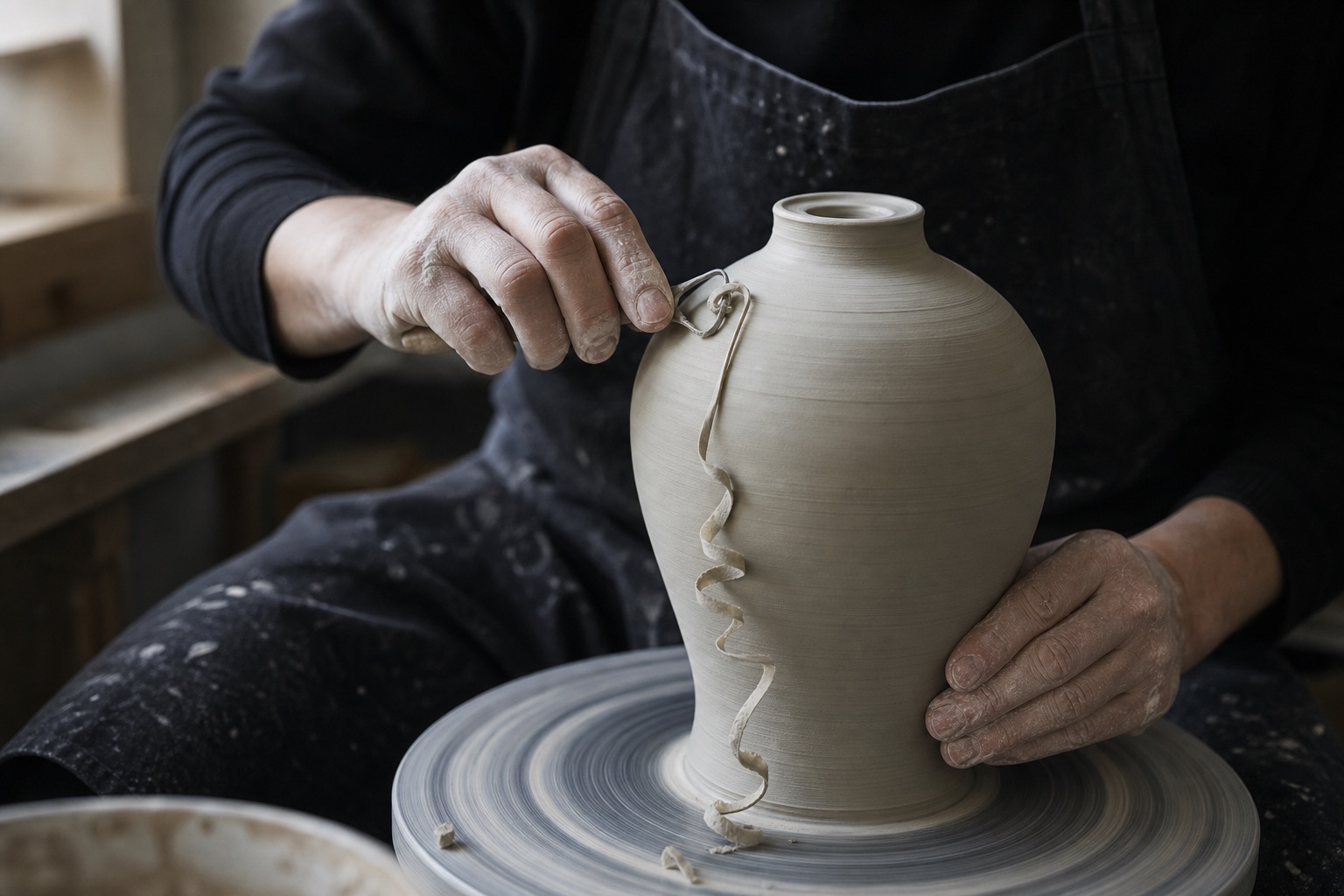
Four minutes at the wheel. Nine days before the kiln.
-
Day 1
Thrown 4 minutes
3.1 kg of porcelain becomes a wall four millimetres thin. The meiping goes up in one pull or not at all — porcelain remembers hesitation.
-
Day 2
Trimmed at leather-hard
The foot is cut, the shoulder trued. What was 3.1 kg is now 1.7. The pot is lightest here; everything after adds glass.
-
Day 6
Bisqued 960 °C, 8 hours
Fired once, low. The clay becomes stone enough to handle and porous enough to drink glaze — a sponge disguised as a pot.
-
Day 9
Dipped 3 seconds
One dip in No. 7, held by the foot, pulled at the count of three. Thirty years of practice, most of it learning when to pull.
Scroll, and the kiln climbs with you.
- 100°water smoking
- 573°quartz inversion
- 890°reduction begins
- 1200°glaze melts
- 1263°cone 8 bends
- 1280°cone 9 bends
- 1305°cone 10 · gas off
The ware is set. The door is bricked shut.
Reduction is a controlled act of starvation.
At 890 °C we choke the burners back. The flame, starved of air, takes its oxygen from the iron in the glaze instead. Oxidised iron fires amber; reduced iron fires green. Every celadon you have ever loved is this one chemical apology, repeated for a thousand years.
Our recipe has not changed since 1994. Only the iron moves — half a percent is the difference between morning mist and the bottom of a river. We keep five depths and test every batch of ash against the last.
-
0.5% Fe
No. 1Mist
Barely there. For collectors who want the porcelain to speak first.
-
1.1% Fe
No. 3First Rain
The pale green of a June sky an hour after rain.
-
1.9% Fe
No. 7Old Pond
The house glaze. No. 214 wears it 1.2 mm deep.
-
2.6% Fe
No. 12River Stone
Where the glaze pools in a throwing line, it reads almost blue.
-
3.4% Fe
No. 19Deep Jade
The darkest we go. Past 3.5% the green gives up and turns to iron brown.
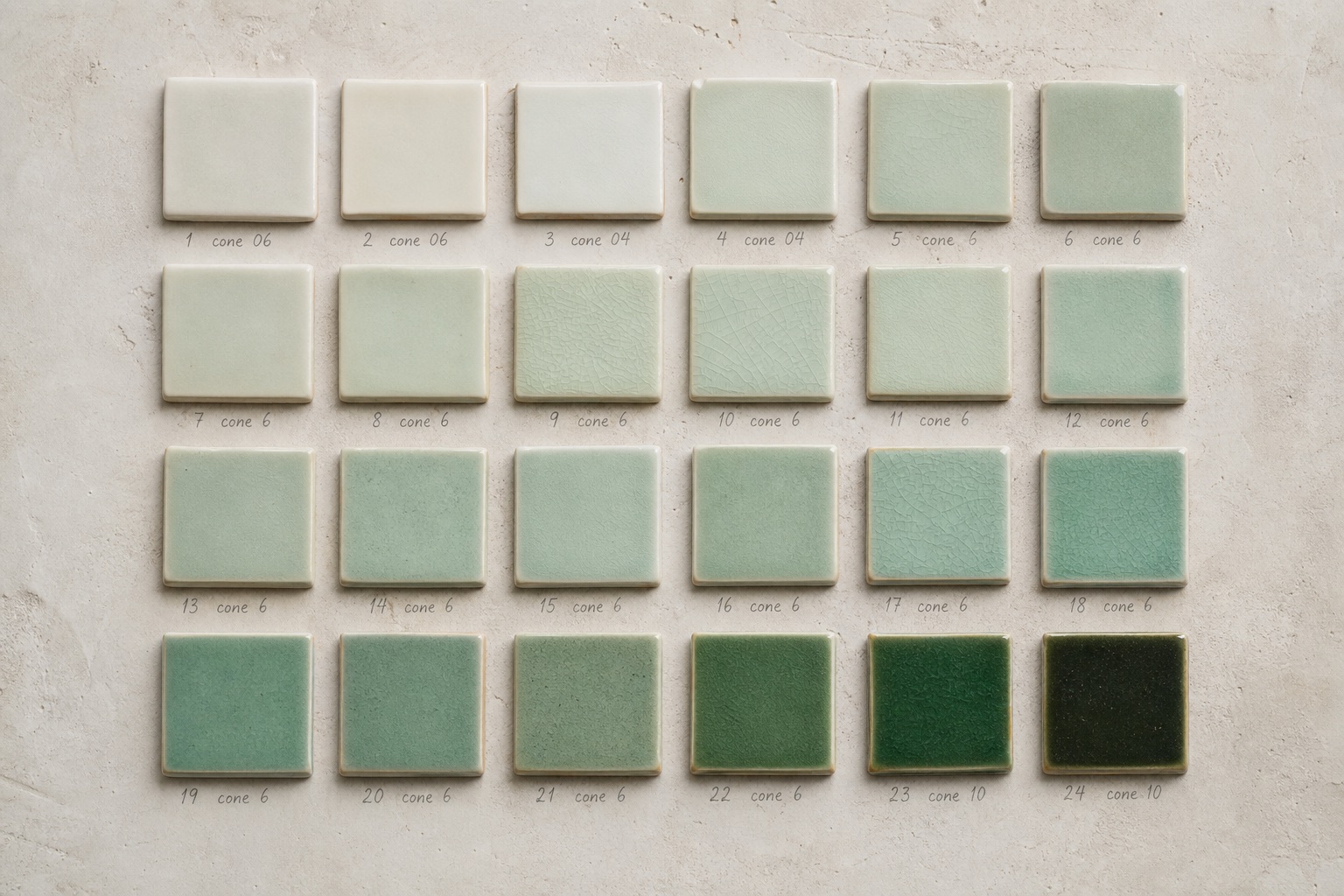
The crackle is not a flaw and not a decision. It is the glaze and the clay disagreeing, slowly, about how much to shrink — a negotiation that continues for years after you take the piece home.
The kiln opens in spring and autumn. The list sees it first.
Each firing holds around ninety pieces. A third are broken back the same morning for falling short. What survives is shown once, in the studio, while the shelves are still warm. Names on the list are invited forty-eight hours before the doors open — no previews, no photographs, no piece sold twice.
Your name is down for the autumn opening. We will write when the kiln cools.
Two letters a year — one for each kiln. Nothing else, ever.